
1.1 History and Background of Robot Development
Author: Huo Haijie | Contact: howe12@126.com
Preface: This chapter is the foundational part of the entire ROS2 robot simulation course. Before formally learning ROS2 tools and programming methods, it is necessary to understand the background of robotics—where does it come from? Where is it now? And where is it going? Only by understanding these basics can you comprehend why ROS2 is designed in this way, and why mastering robot simulation skills is so important in today’s era.
1. The Origin of Robots
1.1 From Myth to Machinery—Humanity’s Millennium Quest for “Artificial Life”
The dream of humans creating robots can be traced back to myth and legend thousands of years ago.
In Greek mythology, Hephaestus—the god of fire and craftsmanship in Greek legend—is said to have made mechanical servants out of gold that could help him forge metals. This represents the earliest human imagination of “artificial laborers.” Similar legends exist in ancient China as well. The “Wooden Ox and Flowing Horse” invented by the Eastern Han scientist Zhang Heng is considered one of the earliest “automatic machines.” Although its actual mechanism remains controversial, it reflects the ancients’ desire for mechanical devices that could automatically transport goods.
In the Middle Ages, skilled craftsmen in Europe began to turn myths into reality. In 1738, French inventor Jacques de Vaucanson created a “mechanical duck” that could move its wings, eat, and excrete. Although it was merely a delicate toy, this mechanical duck demonstrated the potential of mechanical transmission principles in mimicking biological movements. Later, Swiss watchmakers developed “automatic dolls” that could write, paint, and play musical instruments. These devices were collected by various European courts, becoming symbols of the perfect combination of technology and art at that time.
1.2 The Birth of the Term “Robot”
In 1920, a new term destined to be recorded in history was born.
The Czech writer Karel Čapek first coined the term “Robot” in his science fiction play Rossum’s Universal Robots (abbreviated as R.U.R.). In Czech, “robota” means “forced labor” or “hard work.” Čapek used it to describe “artificial workers” who can work tirelessly for humans. The play tells the story of a artificial robot that rebels and eliminates humanity, making it one of the earliest literary works that deeply contemplated the potential risks of artificial intelligence.
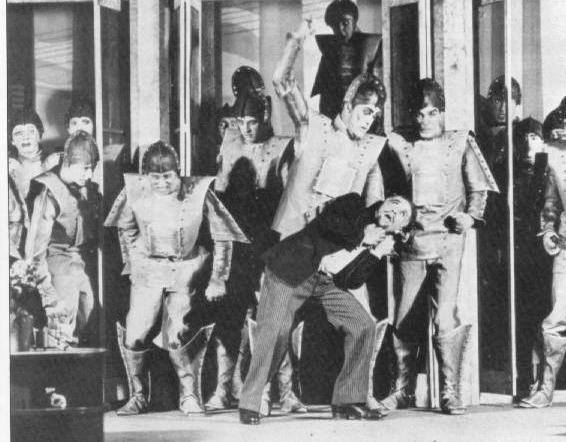 Image note: Poster of “Růženka” premiered in 1920; Karel Čapek coined the term “Robot”
From then on, the term “Robot” quickly spread around the world and became a general term for all types of machines. The name of the discipline “robotics” was first proposed by the science fiction master Isaac Asimov in 1942.
2. Development Stages
2.1 Three Waves—How Robot Technology Has Achieved Today’s State
Looking back at the development of robot technology, three important stages can be clearly identified. Each technological breakthrough is accompanied by explosive industrial growth.
First Generation: Teaching-Replication Robots (1960s-1970s)
1961 was a year that went down in industrial history. General Motors in the United States installed the world’s first industrial robot—Unimate—at its New Jersey plant. This massive machine, invented by engineer Joseph Engelberger, weighed two tons and was powered by hydraulics, enabling precise welding operations. Prior to this, car welding relied entirely on workers holding welding torches, which was inefficient and harmful to workers’ health. The introduction of Unimate marked the official entry of robots into industrial production.
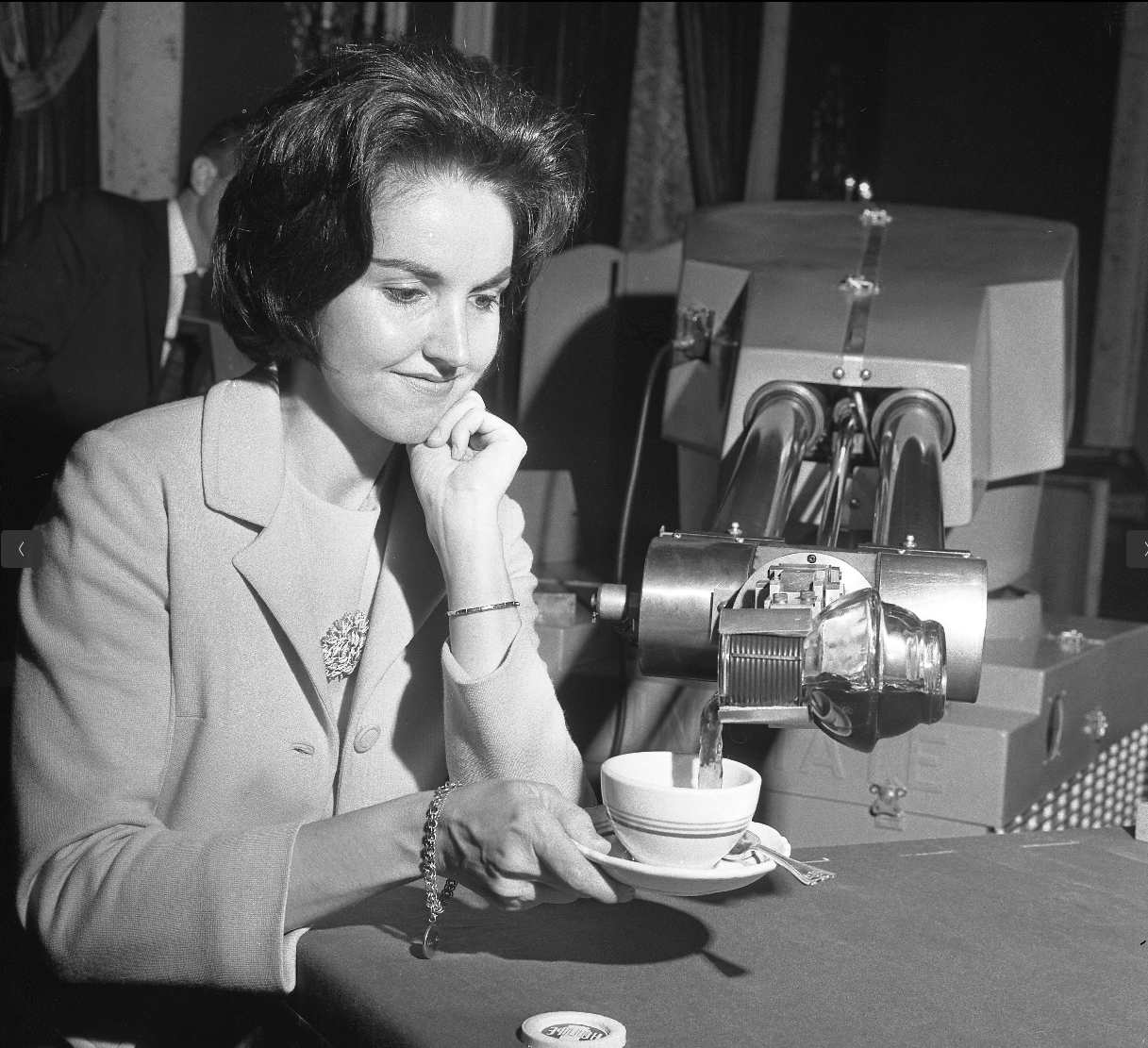 Image caption: The world’s first industrial robot, Unimate, installed at General Motors factory in 1961
The core feature of this generation of robots is “teaching and reproduction” – workers must manually manipulate the robot to complete a task first, after which the robot remembers the entire trajectory and can repeat the action infinitely. While this approach marks the beginning of industrial automation, its drawbacks are also evident: it cannot handle complex and variable environments, and once the product model changes, re-teaching is required.
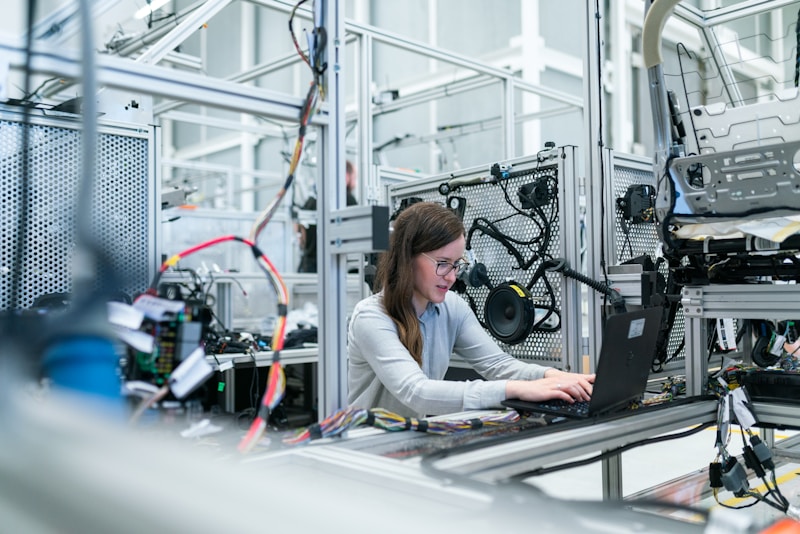 Figure caption: Modern industrial robots are widely used in fields such as automotive manufacturing and electronics assembly
Second Generation: Perceiving Robots (1980s-1990s)
In the 1980s, with the advancement of sensor technology, robots began to have the ability to “perceive” the world. These robots were equipped with force sensors, touch sensors, and even vision sensors, allowing them to adjust their behavior according to environmental changes.
During this period, Japan became the world’s largest industrial robot manufacturer. Japanese companies such as Fanuc, Yaskawa, and Panasonic rapidly emerged as giants in the field of industrial robots. In 1980, this year is thus referred to in the industry as “the Year of Robots”.
Third Generation: Intelligent Robots (2000s–present)
In the 21st century, breakthroughs in artificial intelligence technology have made robots truly “intelligent”. In 2000, Honda in Japan demonstrated the ASIMO robot, which could walk, run, and climb stairs like a human. It was one of the world’s first humanoid robots with bipedal movement capabilities. In 2013, the Atlas bipedal robot from Boston Dynamics was first publicly presented; it could perform complex movements such as jumping, rolling, and back flips, expanding people’s understanding of robot mobility.
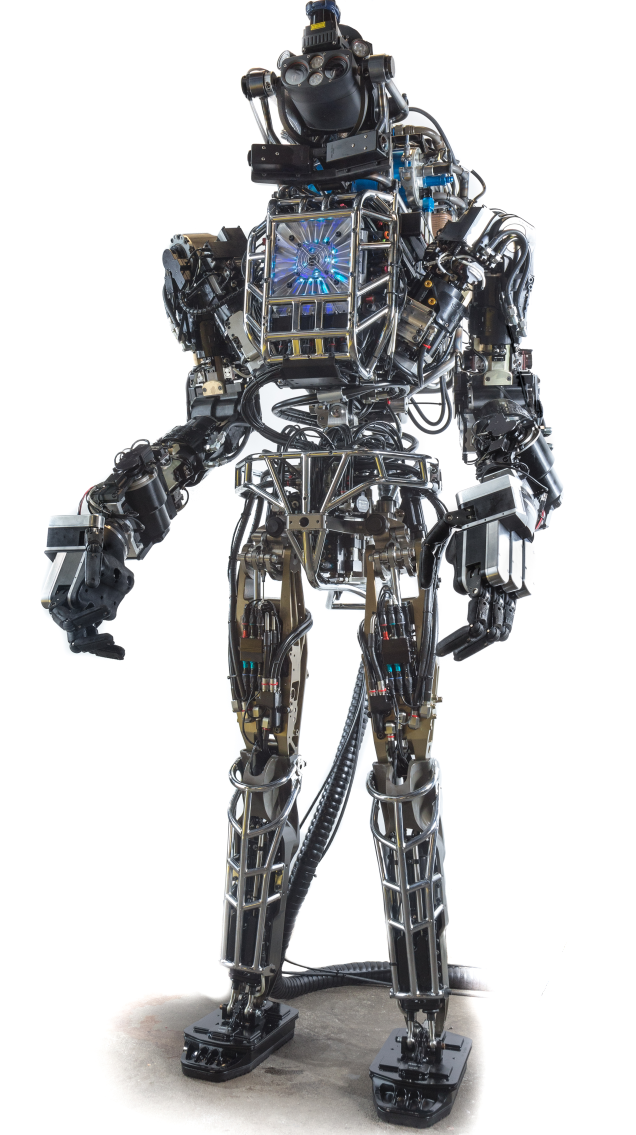 Figure caption: Boston Dynamics’ Atlas is a representative intelligent robot that can perform complex movements
2.2 The Rise of Chinese Humanoid Robots
In recent years, China has made significant progress in humanoid robotics, and a number of enterprises and technological achievements with international competitiveness have emerged.
Unitree is a leading Chinese bipedal robot company. Its Unitree H1 is one of the most advanced humanoid robots in China at present. The H1 is approximately 1.8 meters tall and weighs 47 kg, with a maximum running speed of 3.3 m/s, setting a new record for similar products. Unitree uses a self-developed motor drive system to achieve high-performance motion control.
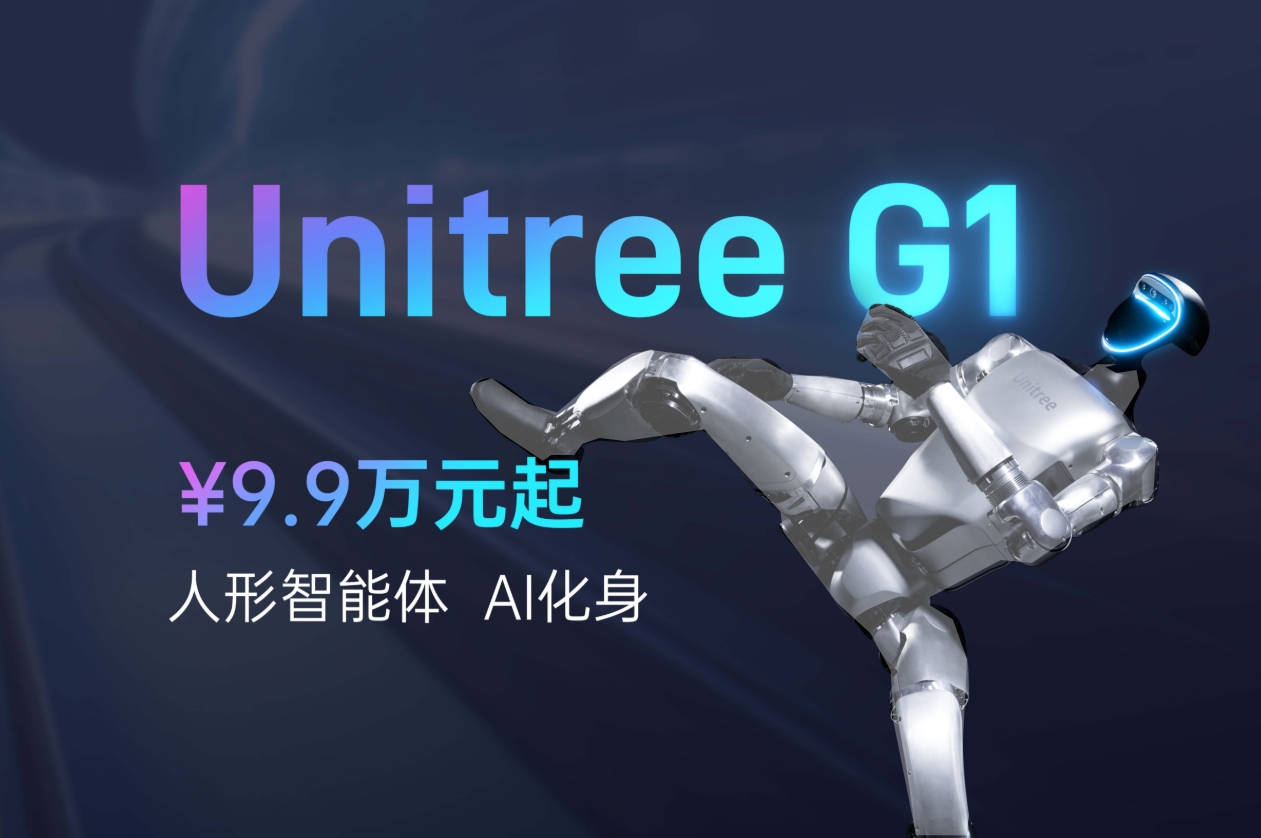 Image caption: Unitree H1 humanoid robot by Unitree Technology
AGIBOT was established in 2023 by a former senior executive at Huawei. It focuses on the research and development of general humanoid robots. AGIBOT aims to create highly intelligent humanoid robot platforms, which can be applied in industrial manufacturing, commercial services, and home environments.
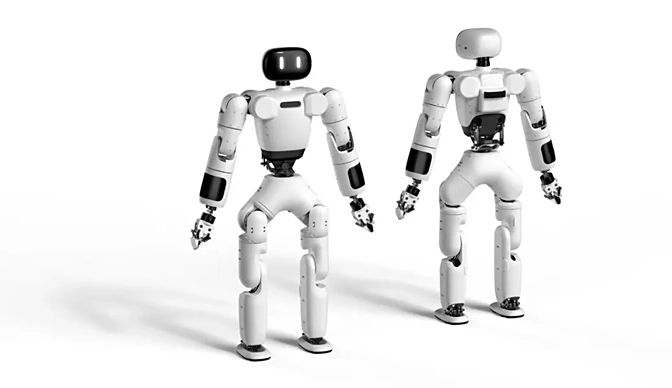 Image caption: AiE Robot universal humanoid robot
LimX Dynamics is a leading Chinese foot-based robot company with extensive technical expertise in bipedal and multi-legged robots. The P series of bipedal robots released by LimX Dynamics possess stable walking and running capabilities, and show excellent adaptability to complex terrains.
 Figure caption: Per-unit power bipedal robot
Comparison of domestic robots and Atlas:
| Dimension | Boston Dynamics Atlas | Chinese humanoid robot |
|---|---|---|
| Driving method | Hydraulic drive | Motor drive |
| Movement capabilities | Parkour, backflip | Walking, running |
| Cost | Million-level | Hundred-thousand-level |
| Application scenarios | Primarily research | Commercial exploration |
| Industry chain | United States | China manufacturing |
Overall, Chinese humanoid robots have advantages in commercialization and cost control.
3. Industry Application Background
3.1 Which industries have been changed by robots?
The value of robotics ultimately lies in its ability to solve practical problems and create economic value. Today, robots have permeated almost every corner of nearly all industries.
Industrial Manufacturing—Revolutionary Changes in the Automotive Industry
When it comes to the most mature field for robot applications, industrial manufacturing is undoubtedly the leader. Automotive manufacturing is the largest market for industrial robots. In the production of a regular car, hundreds of different types of industrial robots are required, including welding robots, spraying robots, assembly robots, and handling robots.
Taking welding as an example, traditional manual welding requires workers to maintain the same posture for a long time. This not only involves high labor intensity but also makes it difficult to ensure the quality of the weld. In modern automobile factories, almost all welding tasks are performed by robots. The welds are uniform and beautiful, and production efficiency is several times higher than that of manual work.
Logistics and Warehousing—The Hidden Hero in the E-commerce Era
When you shop online, you may never think about how the packages are sorted and loaded quickly and accurately. In Amazon’s warehouses, tens of thousands of Kiva robots (now Amazon Robotics) move around on the ground, carrying shelves and transporting goods to the sorters. This “goods-to-person” system has increased warehouse sorting efficiency by more than 5 times.
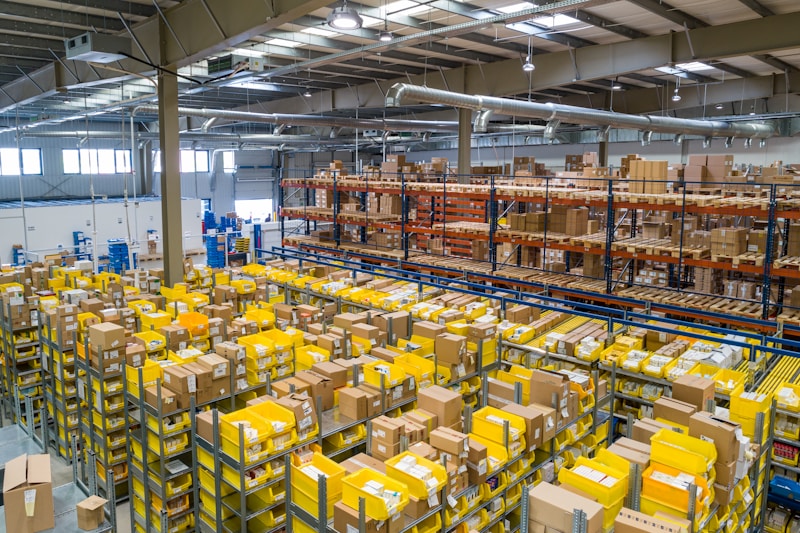 Image caption: Kiva robots in Amazon warehouses significantly improve logistics efficiency
Healthcare – The Guardian of Life
In operating rooms, the Da Vinci Surgical System has become a powerful assistant for surgeons. It does not actually “operate autonomously”; instead, it is manipulated remotely by the doctor to assist in precise minimally invasive surgeries. The surgeon sits at the console and controls the robotic arm like a game controller, which eliminates the influence of hand tremors, making the surgery more accurate.
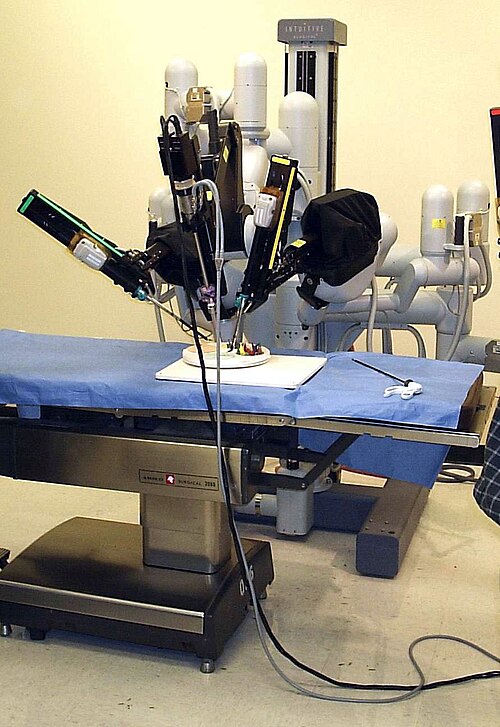 Figure caption: The Da Vinci surgical robot assists doctors in performing minimally invasive surgeries
4. Development Trends in Robotics Technology
4.1 The Future Is Here—These Trends Are Rewriting the Robot Industry
At this current time, we can clearly see that robotics technology is evolving in several important directions.
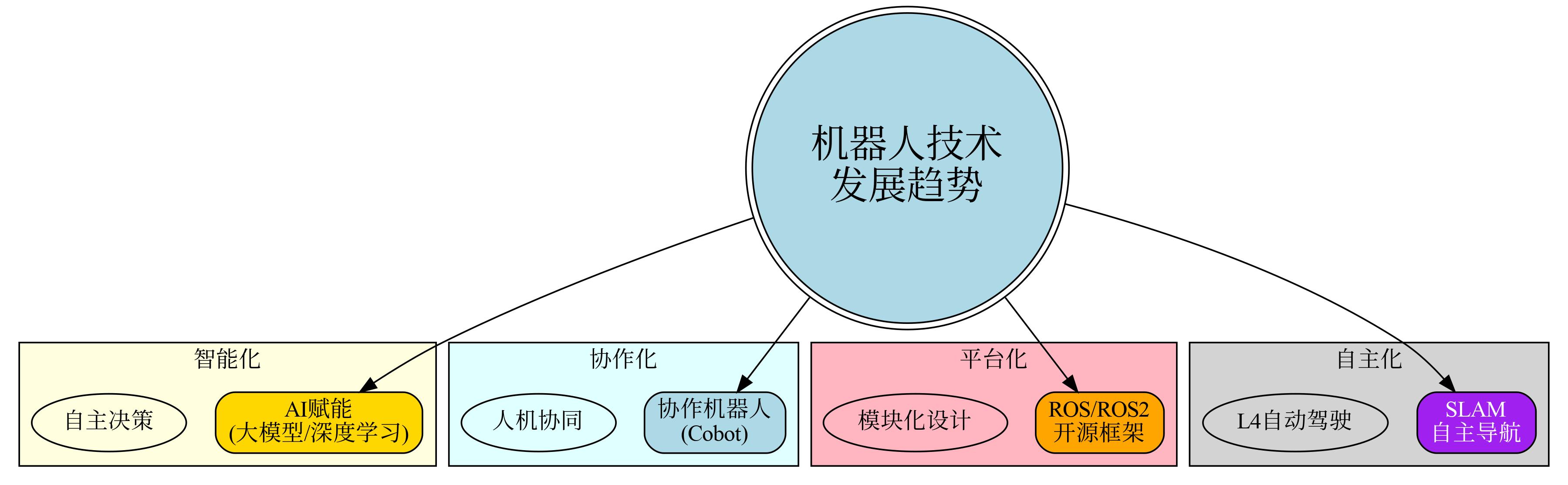 Figure note: Four major trends in robotics technology: intelligence, collaboration, platformization, and autonomy
Trend 1: Intelligence—From “Automation” to “Autonomy”
Traditional robots require humans to pre-set all actions, while the next generation of intelligent robots can “think” on their own. With the development of artificial intelligence technologies such as deep learning and reinforcement learning, robots begin to possess the ability for autonomous learning and reasoning decision-making.
Trend Two: Collaboration—People and Machines Dancing Together
Traditional industrial robots need to be installed within safety fences, as they are too powerful and fast, and it is dangerous to get close to them. However, the new generation of collaborative robots (Collaborative Robot, abbreviated as Cobot) can work safely and closely with humans.
Trend Three: Platformization — Reducing Development Barriers
The emergence of the open-source robot operating system ROS (Robot Operating System) represents a revolution in the field of robot software. It provides a standardized communication framework and tool library, allowing developers to focus on core algorithms rather than low-level hardware drivers.
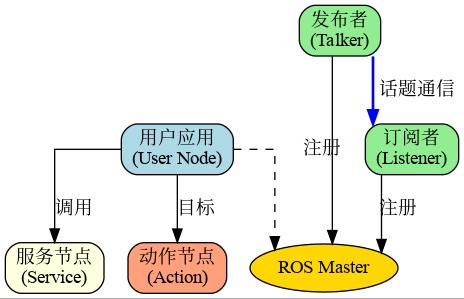 Figure Note: ROS adopts a distributed node architecture and communicates through topics, services, and actions
5. Embodied AI
5.1 Why Embodied AI Is the Next Frontier in AI?
If you follow the latest developments in the field of artificial intelligence, you must have heard of the term “embodied AI”. Why is it so important?
What is embodied AI?
Traditional artificial intelligence—such as the voice assistant in your phone or ChatGPT—primarily processes symbolic data: text, images, and sounds. These AI systems have no “body” and cannot interact directly with the physical world.
Embodied AI emphasizes that AI needs to be “embodied” – having a physical entity (robots, drones, smart devices, etc.), perceiving the world through sensors, and changing the world through actuators. It learns and evolves through interactions with its environment.
Why is embodied AI important?
Professor Li Feifei, a renowned AI researcher, once proposed: “The next major advancement in AI will be ‘giving AI a body’.”
This is because all of human intelligence—language, reasoning, and learning—is closely related to our physical experiences. We know what “heat” is because we have been burned; we know what “weight” is because we have carried heavy objects. A pure language model can write beautiful sentences about “pain,” but it has never truly felt pain.
For embodied AI to enable AI to truly understand the physical world, it is necessary to give them a body and an experience.
 Figure note: Core technologies of embodied AI include LLM, VLM, VLA, reinforcement learning, and imitation learning. Representative projects include PaLM-E, RT-2, GR00T, etc.
5.2 Applications of Large Language Models in Robots
The emergence of Large Language Models (LLMs) has brought a revolutionary breakthrough in enabling robots to understand natural language instructions. Traditional robot control systems need to precisely convert human commands into low-level action commands, a process that often requires tedious programming by professional engineers. In contrast, LLMs can understand vague and complex natural language descriptions and transform them into executable action sequences, significantly reducing the barrier to human-robot interaction.
The PaLM-E model released by Google in 2023 is a milestone in this field. This model integrates the PaLM large language model with a robotic visual perception system, enabling it to directly understand complex commands such as “take the chip from the drawer and put it into the box,” and autonomously plan a complete sequence of actions to fulfill the command (Dadkhahi et al., 2023). PaLM-E demonstrates the great potential of LLMs in robotic task planning.
SayCan(Ahn et al., 2022) adopted a more practical approach, combining LLMs as the “brain” with a learnable skill library. The LLMs are responsible for understanding tasks and selecting appropriate skills, while each skill is executed by sub-policies trained through reinforcement learning. This modular architecture retains the flexibility of language understanding while ensuring the reliability of action execution.
Code as Policies (Liang et al., 2023) goes a step further by proposing to use code as a universal representation for robots. LLMs can directly generate Python code to control robots, which can call perception APIs, actuator control functions, and even include feedback loops to achieve complex behaviors.
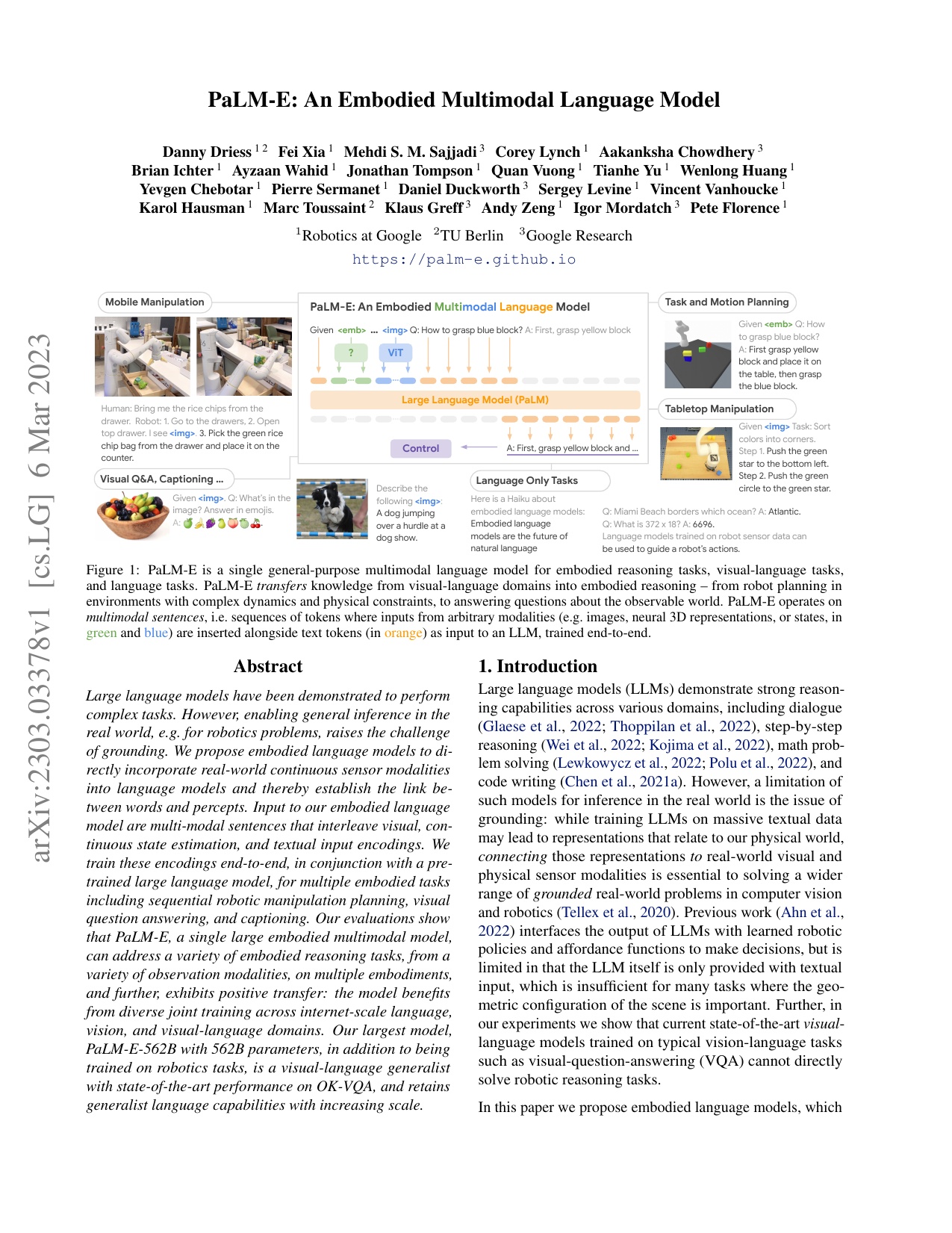 Figure caption: The PaLM-E model understands natural language instructions and controls the robot to perform tasks
5.3 Application of Vision-language Model in Robots
If large language models endow robots with the ability to “understand language,” then vision-language models (abbreviated as VLM) give robots “eyes.” VLM can simultaneously understand image and text information, enabling cross-modal reasoning and comprehension—which plays a crucial role in robot perception environments.
RT-2 (Robotics Transformer 2) is a significant work released by DeepMind in 2023. It is the first robot manipulation model capable of directly learning generalization abilities from visual-language data on the scale of the internet (Brohan et al., 2023). RT-2 encodes both visual inputs and language instructions, and directly outputs robot actions through the Transformer architecture.
OK-Robot(Liu et al., 2024) focuses on grasping open-word objects. This work proposes a simple and efficient framework that enables grasping any object in an unseen environment.
Manipulate Anything (Song et al., 2024) explores how robots can generalize manipulation skills using a vision-language model without human demonstration.
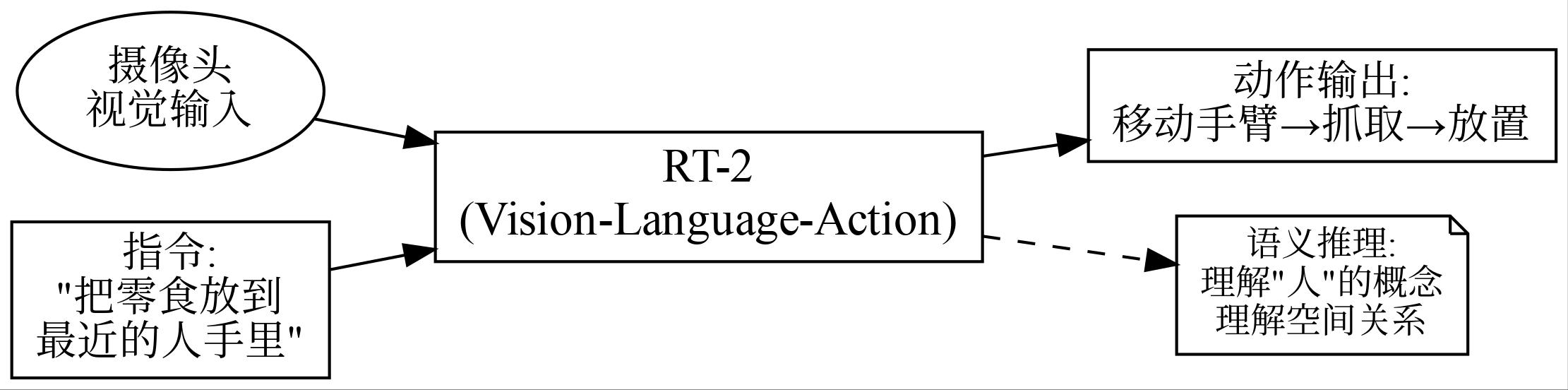 Figure caption: The vision-language model enables the robot to generalize manipulation skills to new objects and scenarios
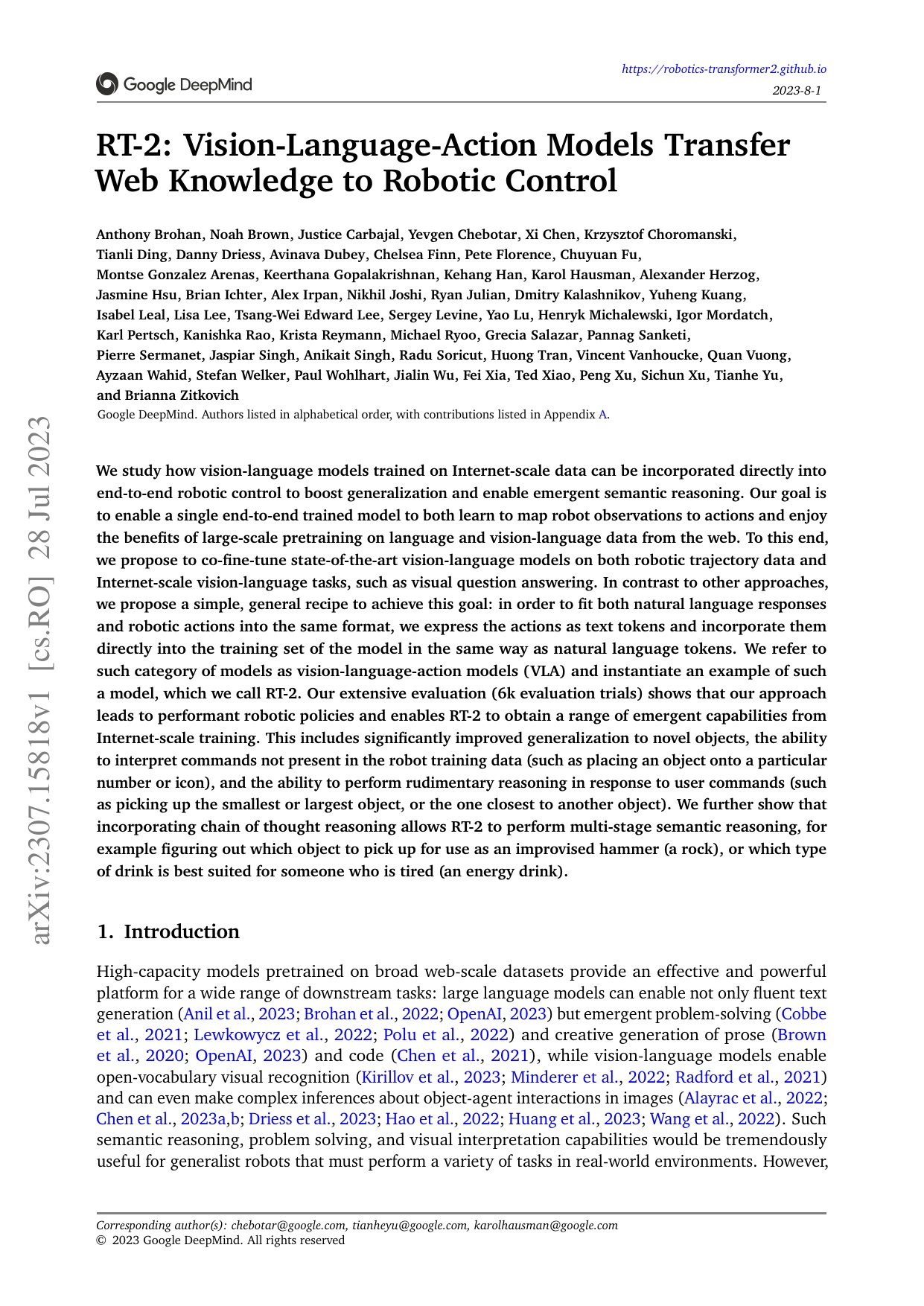 Figure note: RT-2 can understand semantic commands, such as “put the snacks in the hands of the nearest person”
5.4 Vision-language-action model
Vision-language-action model (Vision-Language-Action Model, abbreviated as VLA) is one of the most cutting-edge research directions in the field of embodied AI. Unlike VLM, VLA directly establishes a mapping from visual observations to action outputs, enabling end-to-end learning and reasoning.
Based on RT-1, RT-2 further introduces pre-training of visual language on the scale of the internet, enabling the model to perform reasoning and generalization (Brohan et al., 2023). RT-2 can carry out semantic reasoning tasks such as “give snacks to the nearest person,” demonstrating the potential of VLA in understanding abstract concepts.
The core advantage of VLA lies in its “end-to-end” nature: the entire process from perception to decision-making and execution is carried out within a unified neural network. This not only simplifies the system architecture, but more importantly, achieves global optimization.
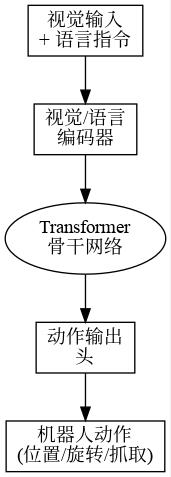 Figure note: RT-2 is a typical VLA model that directly outputs robot actions
5.5 Application of Reinforcement Learning in Robot Control
Reinforcement Learning (RL) is a method that enables robots to learn optimal policies through interaction with the environment and self-experimentation. Unlike traditional rule-based programming, reinforcement learning allows robots to autonomously discover effective behavior patterns in unknown environments.
In 2013, DeepMind demonstrated that Deep Q-Network (DQN) could learn to play Atari games (Mnih et al., 2013). This breakthrough proved the potential of reinforcement learning for processing high-dimensional sensory inputs.
In the field of continuous control, Deep Deterministic Policy Gradient (DDPG) (Lillicrap et al., 2016) and its subsequent improved algorithms (such as TD3, SAC) have become mainstream methods for robot motion control.
The core challenge of reinforcement learning lies in sample efficiency—robots need to undergo a large amount of trial and error in real environments to learn effective policies. To address this issue, researchers have developed Sim-to-Real migration techniques.
 Figure Note: The agent learns the optimal policy through interaction with the environment via trial and error
5.6 Application of Imitation Learning in Robot Skill Acquisition
Imitation learning is a method that enables robots to learn skills from human demonstrations. Compared to reinforcement learning, imitation learning is more intuitive—the human directly shows how to complete tasks, and the robot learns to perform the same actions through observation.
Behavior cloning (BC) is the most basic imitation learning method. The robot uses direct supervised learning to learn the mapping from state to action from demonstration data.
To address the distribution shift problem, DAgger (Ross et al., 2011) proposed an iterative training method. This method allows the robot to continuously collect human correction data during execution, and then retrain the policy using this data.
The ALOHA framework by Stanford University (Zhao et al., 2024) has pushed imitation learning to a new level. ALOHA uses low-cost wearable devices to record high-precision demonstration data of human manipulation, and then uses behavior cloning to train robots to perform the same tasks.
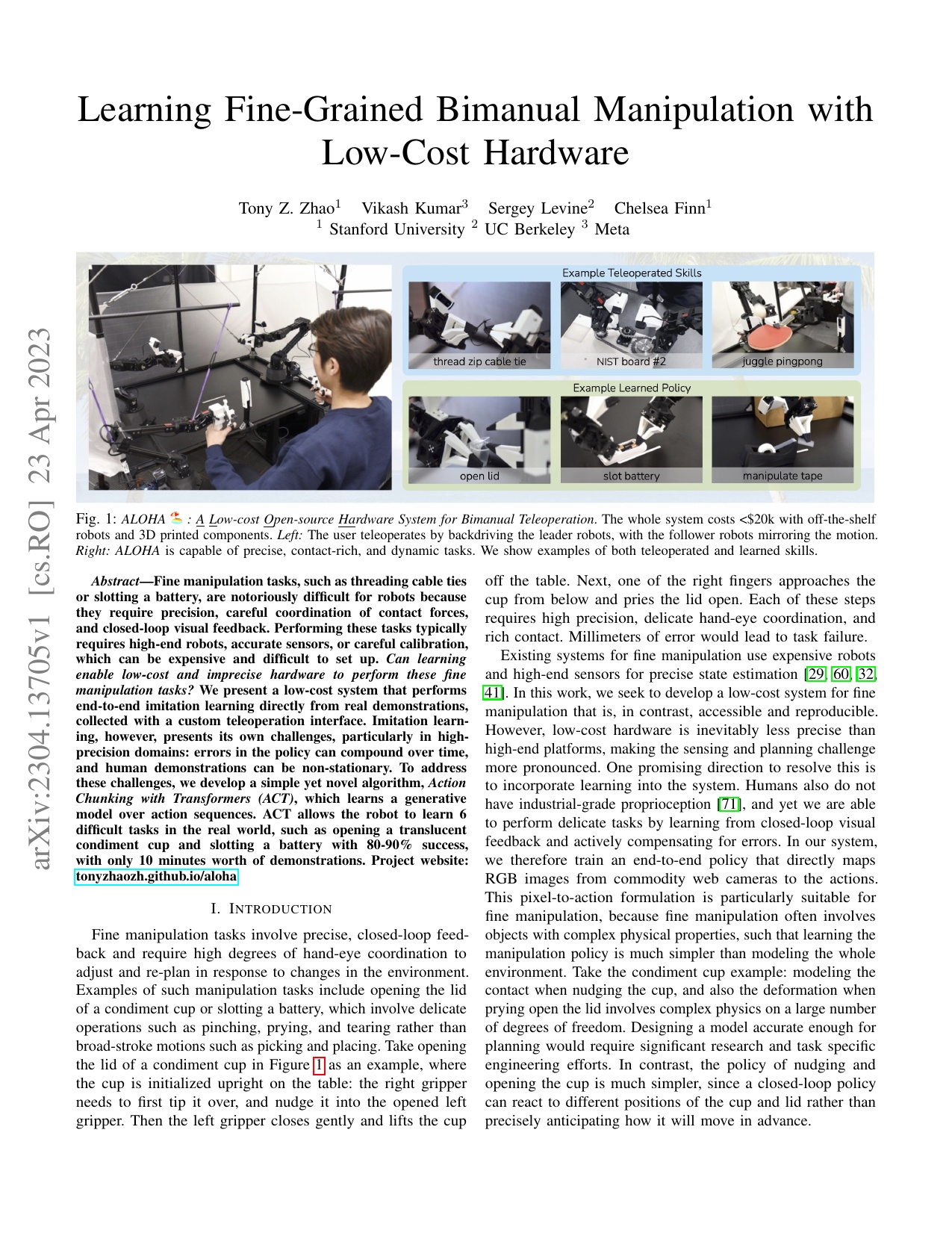 Figure note: ALOHA trains the robot to master precise manipulation skills through human demonstration data
5.7 Spatial Intelligence and 3D Understanding
Spatial intelligence refers to a robot’s ability to understand 3D spatial relationships. It is one of the key technologies for achieving general embodied AI.
PointNet (Qi et al., 2017) is a milestone work in 3D deep learning. It can directly process point cloud data to achieve the classification and segmentation of 3D objects.
NVIDIA GR00T is a general robot base model released in 2024. It aims to enable robots to understand 3D space and perform complex tasks.
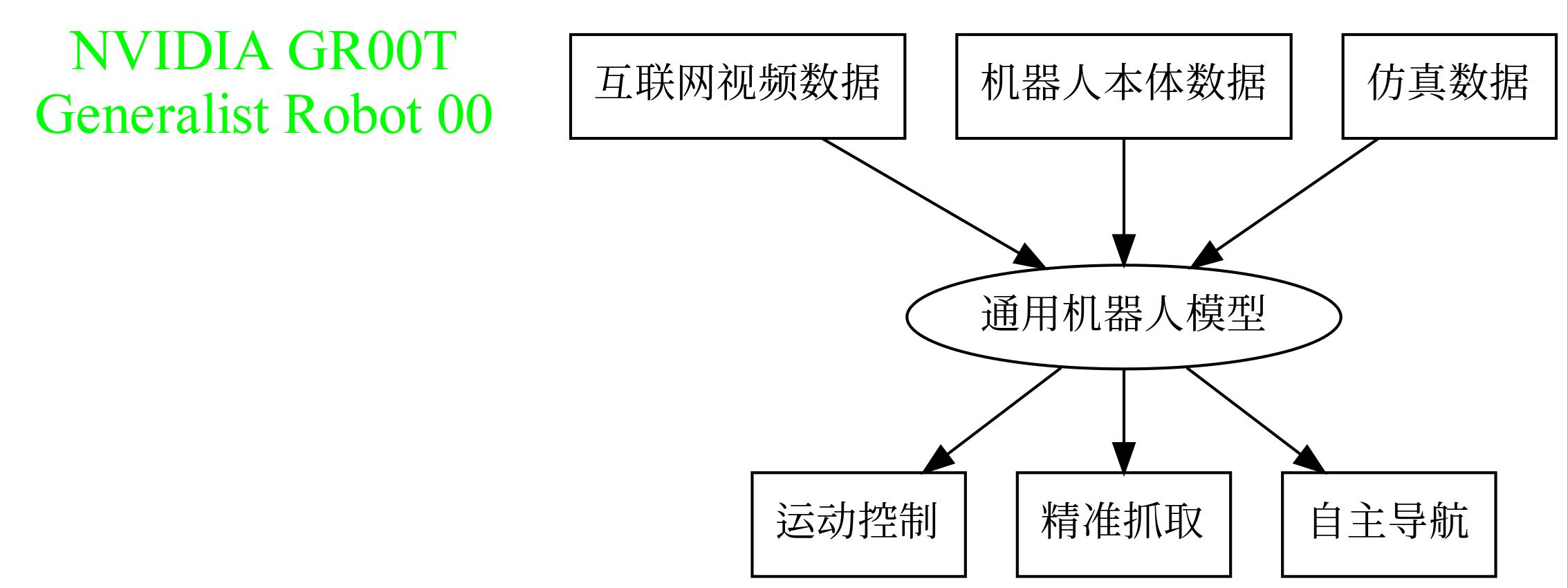 Figure caption: NVIDIA GR00T is a general-purpose robot base model that supports various robot tasks
Li Feifei and Yang Likun’s Perspectives on Spatial Intelligence
Fei-Fei Li is a professor at Stanford University and director of the Stanford AI Lab. In recent years, she has actively promoted the concept of “Spatial Intelligence.” In 2024, Fei-Fei Li emphasized on multiple occasions that true intelligence goes beyond language comprehension; it is more important to understand 3D spaces. Her team is researching how to enable AI systems to understand spatial relationships and perform physical reasoning like humans do. Fei-Fei Li believes that “seeing” is the foundation of intelligence, and visual understanding is a key path to general intelligence. Her research covers areas such as 3D scene understanding, neural rendering, and embodied AI.
Yann LeCun is a Turing Award winner and former AI chief scientist at Meta. In 2025, Yann LeCun founded the new company Advanced Machine Intelligence (AMI) and raised over $1 billion to develop world models. Unlike current large language models, Yann LeCun believes that true AI needs to understand the physical world and possess common sense and reasoning abilities. The JEPA (Joint Embedding Prediction Architecture) he proposed is a key path to achieving this goal. Yann LeCun has repeatedly stated: “Existing LLMs cannot achieve general artificial intelligence. We need AI systems that can understand and predict the physical world.”
Common ground between them: Despite different approaches, Li Feifei and Yang Likun both believe that spatial understanding is crucial for achieving more advanced AI. Li Feifei focuses on visual perspectives, while Yang Likun focuses on world model perspectives. Together, they drive the development of embodied AI.
Summary of This Chapter
In this chapter, we reviewed the development history of robotics. From ancient automatic machines to fictional “artificial workers” in science fiction, and finally to intelligent robots that can walk independently and cooperate with humans today, humanity’s imagination and pursuit of robots have never stopped.
Key points review:
- Robot Origins: From ancient automatons to the emergence of the term “Robot”
- Development Stages: Experienced three major advancements: teaching-reproduction → perception-based → intelligent robots
- Industry Applications: Widely used in fields such as industrial manufacturing, logistics and warehousing, healthcare, and service industries
- Trends: Intelligence, collaboration, and platformization are the three core directions
- Embodied AI: LLM, VLM, VLA, reinforcement learning, imitation learning, and spatial intelligence are the core technologies
Thinking and Practice
- Think about it: In your environment, where are robots already or will be used? What type of robots are they?
- Research it: Which robot company or product interests you the most? What core technologies do they use?
- Discuss it: What ethical issues might the development of embodied AI bring? How should humans respond?
References
Robot History
- Introduction to Robotics: Mechanics and Control - John J. Craig
- IEEE Robotics and Automation Magazine
- R.U.R. - Karel Čapek, 1920
Embodied AI and Large Models
- Dadkhahi, H., et al. (2023). PaLM-E: An Embodied Multimodal Language Model. arXiv:2303.03378.
- Ahn, M., et al. (2022). Do As I Can, Not As I Say: Grounding Language in Robotic Affordances. arXiv:2204.01691.
- Liang, J., et al. (2023). Code as Policies: Language Model Programs for Embodied Control. arXiv:2209.07753.
- Brohan, A., et al. (2022). RT-1: Robotics Transformer for Real-World Control at Scale. arXiv:2212.06817.
- Brohan, A., et al. (2023). RT-2: Vision-Language-Action Models Transfer Web Knowledge to Robotic Control. arXiv:2307.15818.
- Liu, H., et al. (2024). OK-Robot: Open Vocabulary Mobile Manipulation. arXiv:2401.01995.
- Song, S., et al. (2024). Manipulate Anything: Automating Robotic Manipulation in the Real World. arXiv:2404.03528.
Reinforcement Learning and Imitation Learning
- Mnih, V., et al. (2013). Playing Atari with Deep Reinforcement Learning. NIPS 2013.
- Lillicrap, T. P., et al. (2016). Continuous Control with Deep Reinforcement Learning. ICLR 2016.
- Ross, S., et al. (2011). A Reduction of Imitation Learning to No-Regret Online Learning. AISTATS 2011.
- Bojarski, M., et al. (2016). End to End Learning for Self-Driving Cars. arXiv:1604.07316.
- Zhao, T. Z., et al. (2024). ALOHA: Learning to Do by Learning from Observation. CoRL 2024.
Spatial Intelligence and 3D Understanding
- Qi, C. R., et al. (2017). PointNet: Deep Learning on Point Sets for 3D Classification and Segmentation. CVPR 2017.
- NVIDIA (2024). GR00T: Generalist Robot 00 Foundation Model. NVIDIA GTC 2024.
In the next section, we will learn “1.2 Composition and Classification of Robot Systems”, to understand what components a robot consists of and the characteristics of different types of robots.